By 2026, technology will no longer be viewed as a separate investment category for industrial and energy companies. It will be embedded in the way assets are designed, financed, operated and regulated. The most competitive organisations will not necessarily be those that adopt the largest number of new tools. They will be those that connect data, infrastructure, people and capital more effectively.
Several forces are accelerating this shift. Artificial intelligence is moving from experimentation into operational environments. Electricity demand is rising as data centres, electric transport and industrial electrification expand. Cybersecurity is becoming a board-level concern, while supply-chain volatility is encouraging manufacturers to invest in local capacity and more resilient systems.
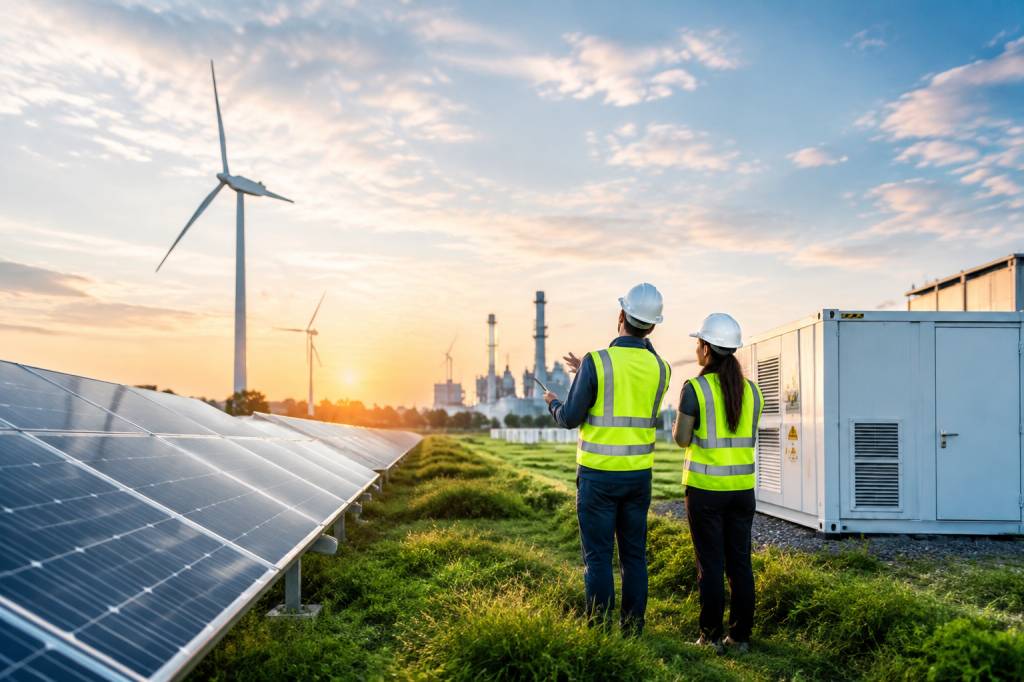
At the same time, the energy transition is becoming more complex. Renewable generation continues to grow, but grids must also manage intermittency, congestion and rising peak demand. Decarbonisation technologies are advancing, although their commercial deployment remains uneven. In this environment, the key question for 2026 is not whether technology will shape industry. It is how quickly companies can turn technological potential into reliable economic performance.
Artificial intelligence moves from pilot projects to industrial operations
Generative and predictive artificial intelligence will remain one of the defining technology trends of 2026. However, the discussion is likely to become more practical. After two years of enthusiastic experimentation, industrial leaders are asking tougher questions: Can an AI system improve uptime? Can it reduce energy consumption? Can its recommendations be audited? And who is accountable when an automated decision is wrong?
The most valuable applications will be closely linked to existing operational data. In manufacturing, AI can identify anomalies in production lines, optimise quality control and anticipate equipment failure. In power generation, machine-learning models can improve forecasting for wind and solar output, helping grid operators balance supply and demand. In oil, gas and chemicals, AI-supported inspection systems can analyse sensor readings and flag risks before they become safety incidents.
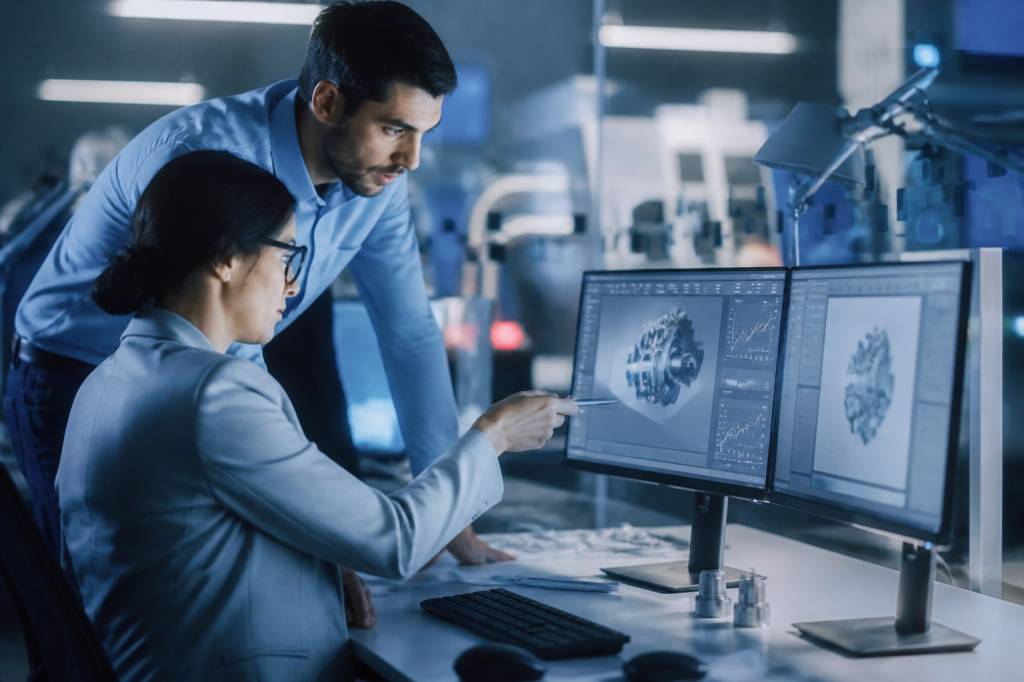
Digital twins will reinforce this trend. A digital twin is not simply a 3D model of a factory or power plant. It is a dynamic representation connected to live operational data. When combined with AI, it can simulate maintenance schedules, production changes or energy-efficiency measures before they are implemented in the physical world.
The challenge is data quality. Many industrial organisations still operate with fragmented systems, outdated sensors and incompatible software. An AI model trained on incomplete or poorly labelled data may produce an impressive demonstration but a weak business result. In 2026, investment in data architecture, industrial connectivity and governance will be just as important as investment in algorithms.
Edge computing brings intelligence closer to the asset
Industrial companies are also moving beyond the idea that every important calculation should take place in a central cloud. Edge computing processes data closer to machines, substations, vehicles or production lines. This reduces latency and can improve resilience when connectivity is limited.
For a robotic production line, a delay of several seconds may be unacceptable. For a wind turbine operating in a remote location, sending every data point to a distant data centre may be inefficient. Edge systems can analyse information locally, transmit only the most relevant signals and continue operating even when communications are interrupted.
This architecture will be particularly important in energy infrastructure. Distributed energy resources, including batteries, rooftop solar and electric vehicle chargers, create millions of points that must be monitored and coordinated. Local intelligence can help manage those assets while reducing pressure on central control systems.
Edge computing will not replace cloud platforms. The more likely model is a hybrid one: cloud systems provide large-scale analytics, long-term storage and enterprise coordination, while edge devices deliver rapid operational decisions. The winners will be companies that design both layers as part of one architecture rather than treating them as competing technologies.
Electrification changes the industrial power equation
Electrification is moving from a climate strategy to an industrial competitiveness issue. Heat pumps, electric boilers, induction systems, battery manufacturing and electric mobility are all increasing the need for reliable power. Data centres are adding another layer of demand, with some facilities requiring the electricity consumption of a medium-sized city.
The International Energy Agency has repeatedly highlighted the expected growth in global electricity demand during the second half of the decade. The precise pace will vary by region, but the direction is clear: grids will need to connect more generation, manage more flexible demand and accommodate increasingly digital loads.
For industrial companies, electrification raises several operational questions. Is the local grid strong enough? Can the site secure long-term power contracts? Should it build on-site generation or storage? How can production be adjusted when electricity prices rise or renewable output falls?
These questions are creating a market for energy-management platforms. Advanced systems can combine production schedules, electricity prices, weather forecasts and battery capacity to determine when equipment should operate. A factory that can shift non-critical processes by a few hours may reduce costs while supporting grid stability.
However, electrification is not automatically low-carbon. Its environmental impact depends on the power mix, the efficiency of the equipment and the way new infrastructure is built. Companies will need to measure emissions across the full system rather than assuming that replacing a fossil-fuel process with an electrical one is sufficient.
Grid modernisation becomes a strategic priority
Energy transition plans often focus on new generation capacity. In 2026, greater attention will be directed towards the networks that connect that capacity to consumers. Transmission and distribution grids are becoming the critical infrastructure of the digital and industrial economy.
Grid operators are adopting advanced sensors, automated substations and software capable of detecting faults in real time. Technologies such as dynamic line rating can help determine how much electricity existing transmission lines can carry under current weather conditions. This can increase capacity without immediately building new corridors, although it does not eliminate the need for long-term investment.
Battery storage will also become more integrated into grid planning. Utility-scale batteries can provide frequency regulation, manage short periods of peak demand and absorb excess renewable electricity. Their role is expanding, but duration remains an important limitation. A battery designed to respond for one hour serves a different purpose from a system capable of supplying power over several days.
Long-duration storage, demand response and improved interconnection will therefore remain central areas of innovation. The most successful projects are likely to combine several solutions rather than rely on one technology. The grid of 2026 will be less like a one-way highway and more like a constantly managed network of diverse resources.
Industrial robotics becomes more flexible
Robotics is entering a new phase. Traditional robots excel in highly structured environments, but advances in machine vision, sensors and AI are making automation more adaptable. Collaborative robots, or cobots, can work alongside employees on tasks such as assembly, packaging, inspection and material handling.
This flexibility matters because many manufacturers are producing shorter runs and a wider variety of products. A robot that requires weeks of reprogramming for every change is less useful in a market shaped by customised orders and unpredictable demand. Newer systems can be trained through software interfaces, visual demonstrations or natural-language instructions, although human supervision remains essential.
Autonomous mobile robots will also expand inside warehouses, ports and factories. They can transport components, support inventory management and reduce the physical burden on workers. In sectors facing labour shortages, automation can help companies maintain output. Yet it should not be presented as a simple replacement for people. Maintenance, programming, safety management and process design all require new skills.
The central issue is workforce transformation. Industrial companies that invest in training will capture more value from automation than those that purchase equipment without preparing employees. The factory of the future still needs human judgement; it simply applies it to different problems.
Cybersecurity becomes part of operational resilience
As factories, pipelines, buildings and power networks become more connected, the boundary between information technology and operational technology continues to disappear. That creates efficiency, but it also increases exposure to ransomware, espionage and operational disruption.
Cybersecurity in an industrial environment cannot be treated in the same way as security for an office network. A software update that is routine in a corporate environment may interrupt a production line or affect a safety-critical system. Operators must understand which assets are connected, which systems are vulnerable and how they can recover if an attack occurs.
In 2026, more companies will adopt zero-trust principles, stronger identity management and continuous monitoring across operational networks. Cybersecurity will also be linked more closely to supply-chain management. A vulnerable software component, remote maintenance connection or third-party device can create risks far beyond the organisation that originally purchased it.
Regulation will reinforce this focus. European requirements such as the NIS2 Directive and the Cyber Resilience Act are raising expectations for risk management, incident reporting and product security. Compliance will be important, but resilience is the larger objective. A company that can isolate an affected system and restore operations quickly is better positioned than one that relies only on preventing every possible breach.
Low-carbon technologies face a commercial reality check
Decarbonisation technologies will continue to develop in 2026, but investors and industrial buyers will demand clearer evidence of scalability. Green hydrogen, carbon capture, sustainable fuels and advanced batteries all have potential, yet their deployment depends on infrastructure, regulation, offtake agreements and cost reduction.
Green hydrogen is likely to find its strongest early applications in sectors where direct electrification is difficult, including certain chemical processes, refining and primary steel production. The question is not simply how much hydrogen can be produced. It is whether supply can be delivered at the right purity, volume and price to industrial users.
Carbon capture will also remain controversial and highly project-specific. It may play a role in cement, lime, chemicals and other processes with unavoidable process emissions. However, capture rates, transport networks, storage availability and lifecycle emissions must be assessed carefully. A headline capture percentage does not automatically represent a complete climate solution.
Battery innovation will focus on more than energy density. Manufacturers are working to reduce the use of critical minerals, improve safety, shorten charging times and increase recycling. Alternative chemistries such as sodium-ion batteries may gain attention in applications where cost and material availability matter more than maximum range.
The market is entering a more disciplined phase. Demonstration projects will still attract attention, but commercial contracts, reliable performance data and transparent lifecycle assessments will determine which technologies move into mainstream deployment.
Digital product passports and circular manufacturing
Digitalisation is also changing how products are tracked throughout their lifecycles. Digital product passports can record information about materials, production methods, repairability, carbon impact and end-of-life options. This is particularly relevant for batteries, electronics, machinery and construction products.
For manufacturers, the passport is not merely an environmental reporting tool. It can support maintenance, resale, refurbishment and component recovery. A machine with a transparent service history may retain more value than one whose operating conditions are unknown. Recyclers can also identify materials more efficiently when product data is available.
European regulation is helping drive this development, especially in sectors connected to batteries and resource-intensive goods. The implementation challenge will be interoperability. If each company creates a proprietary system, the result will be another layer of complexity. Common standards and secure data-sharing mechanisms will be essential.
Circularity will therefore become increasingly connected to industrial strategy. Companies that design products for disassembly, repair and reuse may reduce exposure to volatile raw-material prices while creating new service revenues. Waste reduction is becoming a business model issue, not only an environmental aspiration.
What industry leaders should prioritise in 2026
Technology investment will be more effective when it is connected to a small number of measurable business outcomes. For industrial and energy executives, several priorities stand out:
- Build a reliable data foundation before scaling artificial intelligence across operations.
- Map critical assets and dependencies across both IT and operational technology environments.
- Assess electricity demand, grid constraints and flexibility needs at every major site.
- Link automation programmes to workforce training, safety and job redesign.
- Test low-carbon technologies through clear commercial and lifecycle criteria.
- Use digital product information to support maintenance, reuse and material recovery.
- Measure technology projects through operational indicators such as uptime, energy intensity, quality and resilience.
The year ahead will reward pragmatism. The most important innovation may not be the most futuristic one, but the system that helps a factory avoid an unplanned shutdown, enables a grid to connect new renewable capacity or allows a company to use less energy without reducing output.
In 2026, industry, energy and technology will be increasingly inseparable. Artificial intelligence will improve decisions, electrification will reshape demand, robotics will transform work and digital infrastructure will become a condition of competitiveness. But technology alone will not determine the outcome. Governance, skills, investment discipline and the ability to execute at scale will decide which organisations turn these trends into durable industrial advantage.